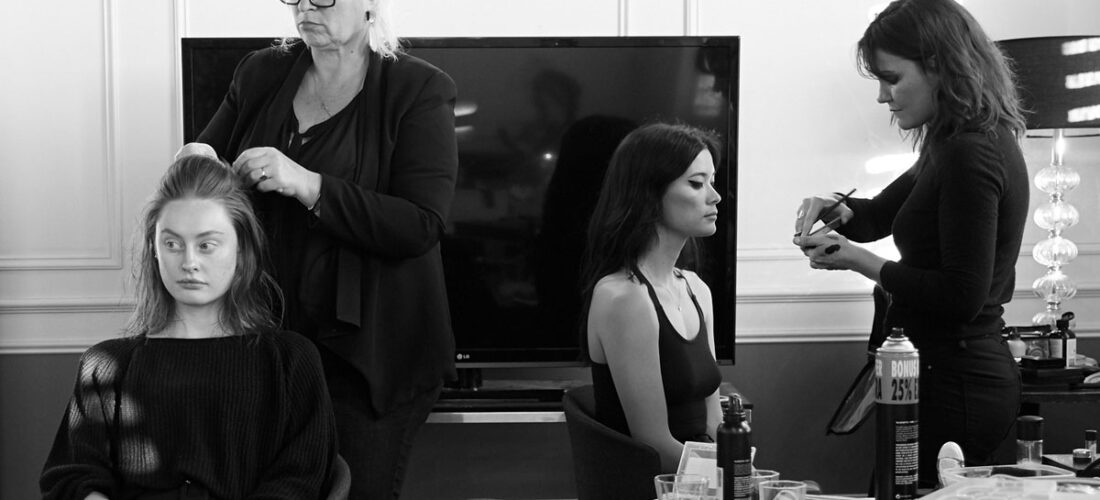
01 — More than choosing clothes. A stylist makes something true about a person or brand visible. The clothes are the tool. The result is the person looking – and feeling – like themselves, only more so.
02 — Listening comes before looking. Building rapport, reading what a person brings to the room, creating the conditions for confidence.
03 — Vision held across every decision. Matching personality, garments and environment to the right aesthetic. Working with what exists. Making it all intentional.
04 — Brand styling is ongoing work. The stylist makes sure every image belongs to the same visual world. For emerging designers, finding the right stylist early saves a lot of bad imagery.
05 — Look at the work. A stylist’s Instagram is a portfolio. Shared sensibility matters more than credentials. Ask designers whose imagery you admire who they work with.
06 — Styling shapes how fashion moves forward. Styling influences how fashion is read and received beyond the frame. A bigger responsibility than the job title implies.
07 — Keep turning up. Get your work on the right red carpet by showing up; ask, DM, and turn up to in person events like FashLab’s where connections are made.
What Do Stylists Do?