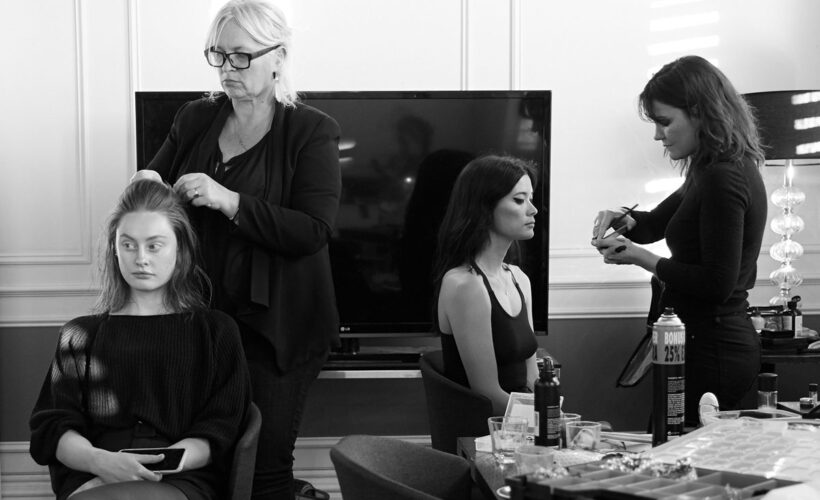
July’s meetup had stylists and designers in the same room, talking candidly about their work and how they can support one another. Unsurprisingly, they found they had a lot in common.
More than choosing clothes.
Ask someone outside the industry what a stylist does and you’ll get a vague answer about clothes and photo shoots. The people in the room last Tuesday knew better.
A stylist looks at a person, a brand, or a brief and figures out how to make something true about them visible. That might mean a wardrobe edit, a thematic shoot, a brand campaign, or dressing someone for the most important event of their year. The clothes are the tool. The result is the person feeling – and looking – like themselves, only more so.
The stylist’s job is to reveal who the person or brand is. That requires listening before it requires looking.
Which is why all the stylists in the room talked as much about communication as they did about clothes.
The conversation starts before the clothes come out.
Building rapport came up early and kept coming up. Meeting a client, a subject, or a collaborator and making them feel comfortable enough to be honest – about what they want and what they’re nervous about – is where the work begins.
People bring a lot to a personal styling session. Celebrities and ‘nobodies’ alike. Insecurities, a fixed idea of what they can and can’t wear, anxiety about being seen. A good stylist reads all of that and works with it.
Confidence was the word that came up most. The goal is for the person to walk away feeling it and projecting it.
What stylists bring.
When asked to name the things a stylist delivers that no one else does, the group had a lot to say:
- A clear vision and the ability to hold it across every decision
- Matching personality, garments and accessories to the right aesthetic – not just what looks good, but what’s true
- The ability to work with what’s already in a wardrobe
- Creating the conditions for a person’s confidence to come through
- For brands, translating creative DNA into imagery that speaks to the right people
- For shoots, curating the edit so the brand’s essence comes through
- Reading the cultural moment – understanding what styling choices mean beyond the frame
That last one generated the most discussion. Styling influences how fashion is read and received, which is a bigger responsibility than the job title implies.
Working with brands.
Several stylists in the room work primarily with fashion brands, and the conversation shifted usefully toward that.
Brand styling is about consistency as much as creativity. Every image and campaign needs to carry a recognisable visual identity. The stylist makes sure that the choices made on a shoot on a Tuesday morning belong in the same world as the choices made six months earlier.
With the volume of content brands need now, the relationship between brands and stylists has become more continuous. Less a one-off hire, more an ongoing creative partnership.
A stylist who understands your brand can make every image feel intentional, even when it’s made quickly.
For emerging designers especially, finding the right stylist early can save a lot of time and a lot of bad imagery.
How to find the right one, and be the right one.
Practical questions at the end of the evening:
How do you find a stylist whose work fits what you’re doing?
Look at the work. A stylist’s Instagram is a portfolio. The aesthetic is usually clear within a few scrolls. You’re looking for someone whose eye already moves in the same direction as your brand.
Shared sensibility produces better work than credentials. And word of mouth still travels fastest. Ask designers whose imagery you admire who they work with.
And how do you get your work in front of the stylist who will take your work to the right red carpet?
Show up, ask, DM, and turn up to in person events like this one where connections are made. Just keep at it.
The stylist is the architect of vision. Through the relationship between person, garment, and environment, they help shape how fashion is seen — and how it moves forward.
The room found that less abstract than it sounds.