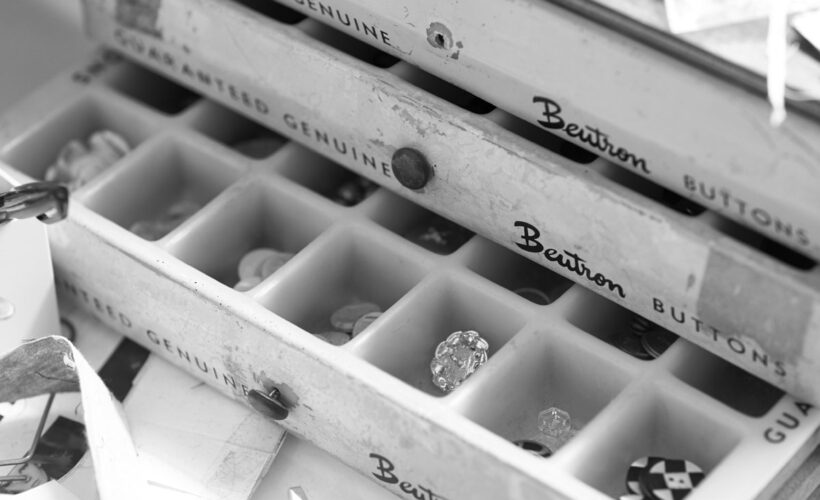
April’s meetup was about retail. What it means to sell things in 2026, when your customer exists across a phone screen, a shop floor, a pop-up, and an Instagram story, sometimes all at once.
The conversation was varied and honest.
The physical space still has something the screen doesn’t.
The group was clear: the experience of a physical environment – what you can touch, try on, hold up to the light – does something a digital experience can’t replicate. Brick and mortar isn’t a legacy format. It’s a different tool with different strengths.
Social media is a distribution channel for ideas. A way to reach people globally, tell your story consistently, and bring someone toward a product before they’ve touched it. The conversation online and the transaction in person can be part of the same journey.
Your customers are a style tribe.
Historical demographic data tells you about markets. Your own customer data tells you about your world.
The people who buy from you reflect the story you’ve been telling and the product you’ve been making. A style tribe you’ve built, probably without realising it. That data is worth more than any market report.
Understanding who those people are is the foundation of every good retail decision. Where you sell, how you price, what you make next.
Bring them inside the process.
Makers in the room spoke about making their process visible — showing how something is engineered, sourced, or constructed. An invitation.
When a customer understands how something is made, they become part of the story, which builds loyalty in a way a discount cannot. It also justifies price – which matters when you’re an independent maker competing against fast fashion economics.
Two formulas worth writing down.
R = D + PD^(V+P) × F
Revenue = Desirability + Product Design, to the power of Value and Price, multiplied by Frequency. Desirability and design are the foundation. Value and price amplify them. Frequency — how often a customer returns — is the multiplier that makes everything else worthwhile.
The ROI Imperative
Increase sales · Increase margin · Decrease operations · Decrease cost of goods sold. Four levers. You don’t have to pull all of them at once — but you need to know which one you’re pulling and why.
What your customer expects right now.
- Direct connection – a sense of relationship with the person or brand behind the product
- Consistent storytelling across every touchpoint
- Speedy feedback – questions answered, problems resolved quickly
- Clear product positioning — they want to know immediately what you are and who you’re for
- Emotional belonging – the feeling that buying from you means something
- Intelligent data use – they expect you to remember them
None of this is new. Doing it all is hard.
Two formats that deserve more attention.
The meetup closed with two retail formats that we could have talked more about.
Pop-ups and test stores.
Low commitment, high intelligence. A pop-up lets you test a location, a price point, a product, or an audience without signing a lease.
Collaborative shared spaces.
Two or more independent businesses sharing a retail environment — costs, foot traffic, and audiences. Done well, the brands complement each other, and the customer has more reason to be there. The key is alignment: the right brands, the right space, the right story told together.
Both deserve a dedicated conversation at a future meetup.
Retail wants you to know your customer, tell your story consistently, and make the physical experience worth leaving the house for.
Easy to say. Worth showing up every First Wednesday to figure out how.